
On November 17, UzhNU hosted an international scientific and practical conference “The Russian-Ukrainian War and the Reaction of the International Community: Political, Legal and Economic Dimensions.” Representatives from Ukraine, Slovakia and Romania presented research covering humanitarian, political, economic and military aspectsю
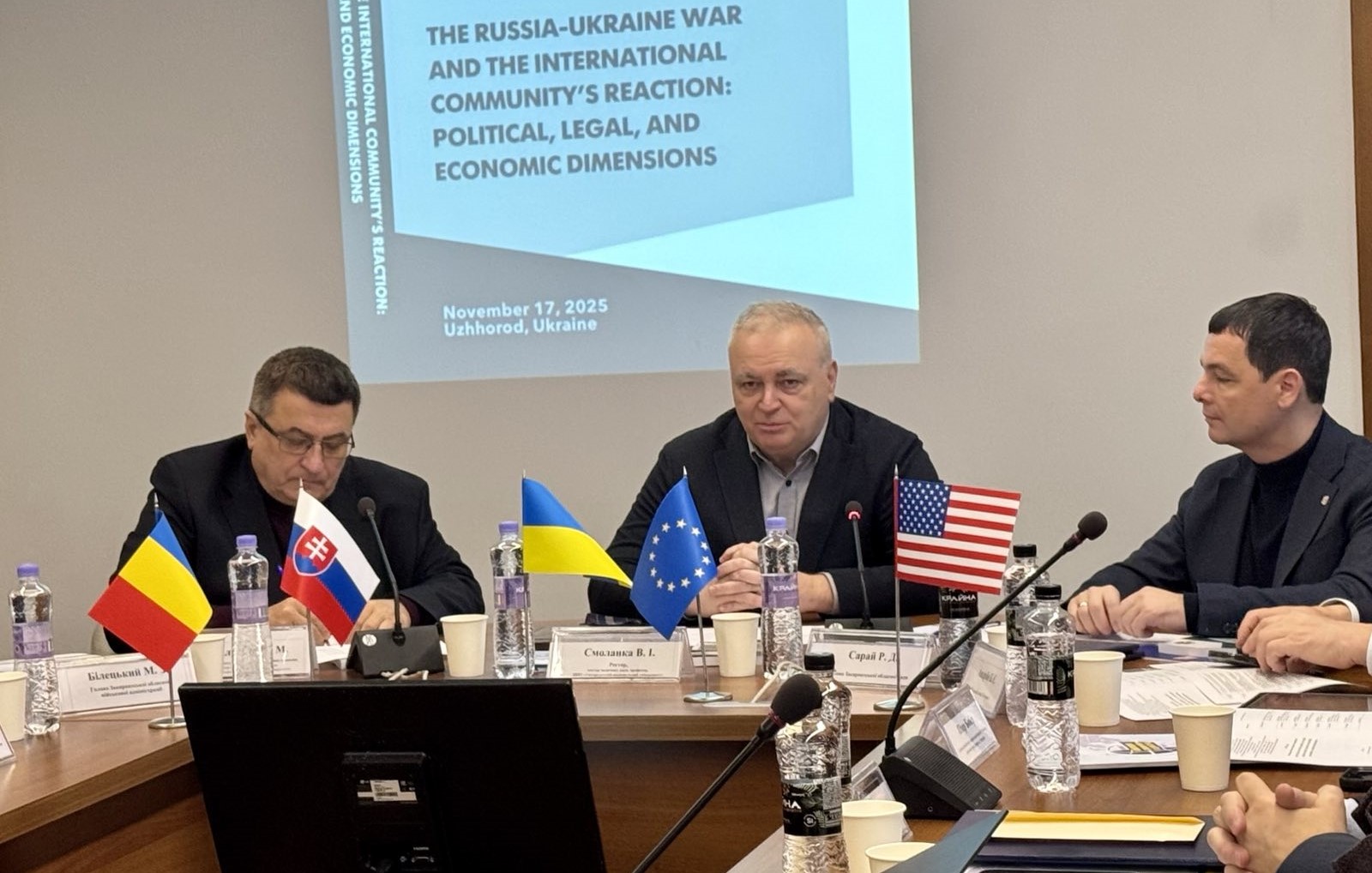
The scientific forum was organized by the Faculty of International Economic Relations of UzhNU together with partners – the Institute of Technology and Economics in Prešov (Slovakia), the Kyiv Institute of the National Guard of Ukraine, the Uzhgorod Trade and Economic Professional College of the State University of Trade and Economics, the University of Oradea (Romania), the National Institute for Strategic Studies, the International Center for Legal and Economic and Social Research of the Countries of Central and Eastern Europe of the National Academy of Sciences of Ukraine in Uzhgorod, the Ukrainian Association of International Economists, the Academy of Political and Legal Sciences of Ukraine, and the Center for Ukrainian-European Scientific Cooperation.
The conference was opened and moderated by the plenary part of the Dean of the Faculty of International Economic Relations, Professor Mykola Palinchak. The Rector of UzhNU, Professor Volodymyr Smolanka, who was present at the event, warmly welcomed the participants and also presented a letter of thanks to Karol Janas, Doctor of Political Sciences, Associate Professor, Head of the Department of Political Science at the Alexander Dubček University of Trenčín (Slovakia).
Representatives of local authorities present 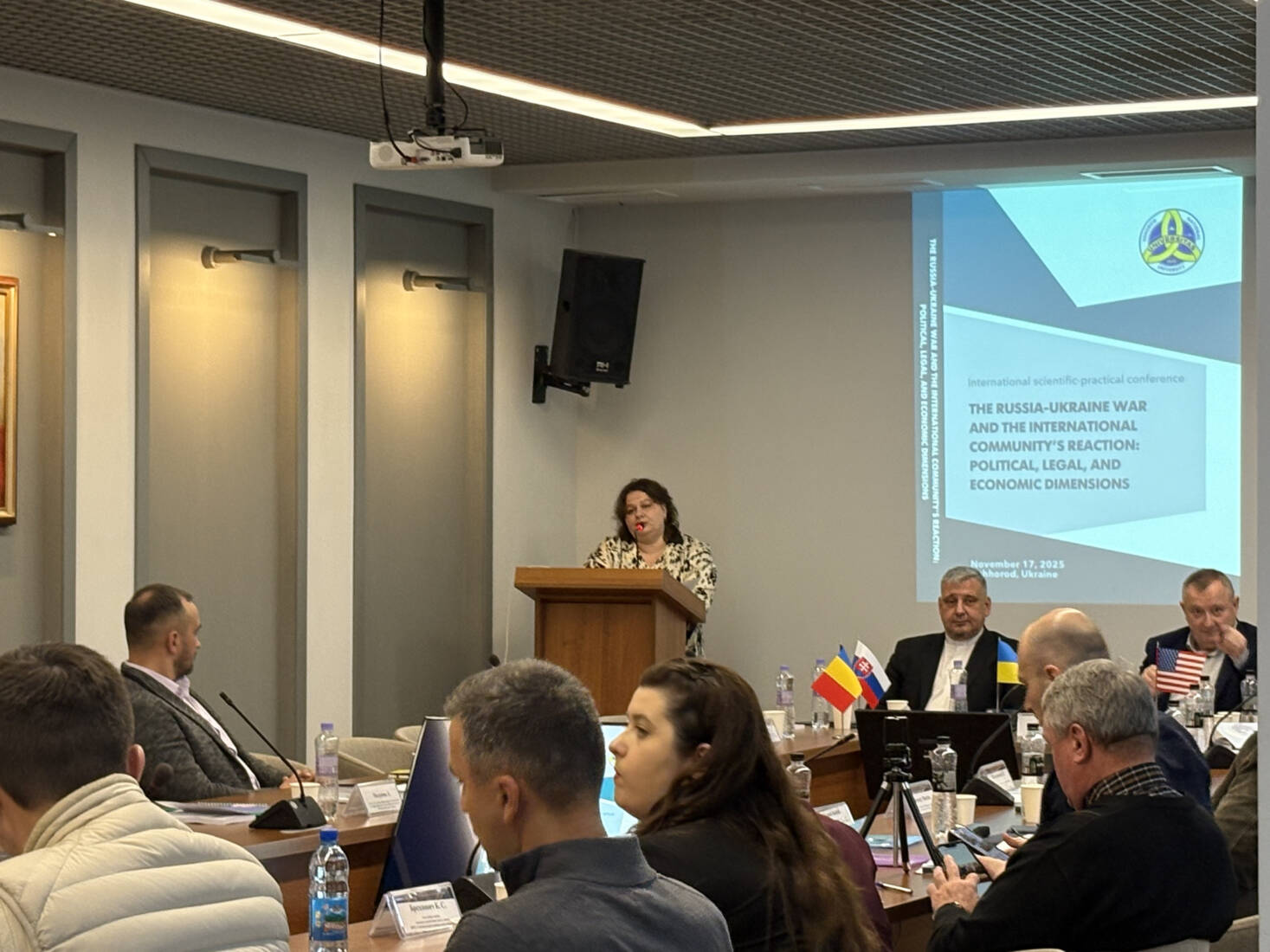 the scientific event spoke during their speeches about the significance of the issue. Thus, the Head of the Regional Council, Roman Saraj, emphasized the importance of international solidarity with Ukraine. Since 2014, the world has been responding to Russia’s aggression with sanctions, legal mechanisms, and economic pressure, and the full-scale invasion of 2022 strengthened the consolidation of the democratic world. “Ukraine has received the status of a candidate for EU membership and is confidently moving forward on the path of reforms. NATO membership remains a key goal for the long-term security of the state,” he noted, adding that the consequences of the war have affected politics, the economy, and security and will remain the subject of scientific research.
Uzhhorod Mayor Bohdan Andriyiv emphasized that this event is a reminder to the whole world: “No country has the right to interfere in another’s land, culture or soul.”
Peter Bober, Head of the Kovralis–Uzhhorod Sister Cities Association, emphasized that Europe and the United States continue to stand by Ukraine, and also spoke about a joint project with UzhNU. “It is being implemented to provide distance learning for veterans and their family members, especially in the Transcarpathian region, where about 25,000 veterans are located. Free courses worth about $100,000 will allow them to acquire new skills and earn money while being close to their families,” added Mr. Bober.
A doctoral student at the I.F. Andriy Buzarov, a member of the Kuras of the National Academy of Sciences of Ukraine, delivered a report entitled “The Expansion of Eurasian Authoritarianism as a Challenge to the Democratic Euro-Atlantic Community: From Syria to Ukraine.” He noted that after the collapse of the Soviet Union, democracy began to grow, but since 2001 there has been a setback in the form of hybrid regimes. The speaker emphasized that Ukraine is supported by almost the entire democratic world and noted that the war has had a very negative impact on the country’s economy, and forecast economic data often does not coincide with the real ones. He also mentioned practical developments, in particular, evacuation carts.
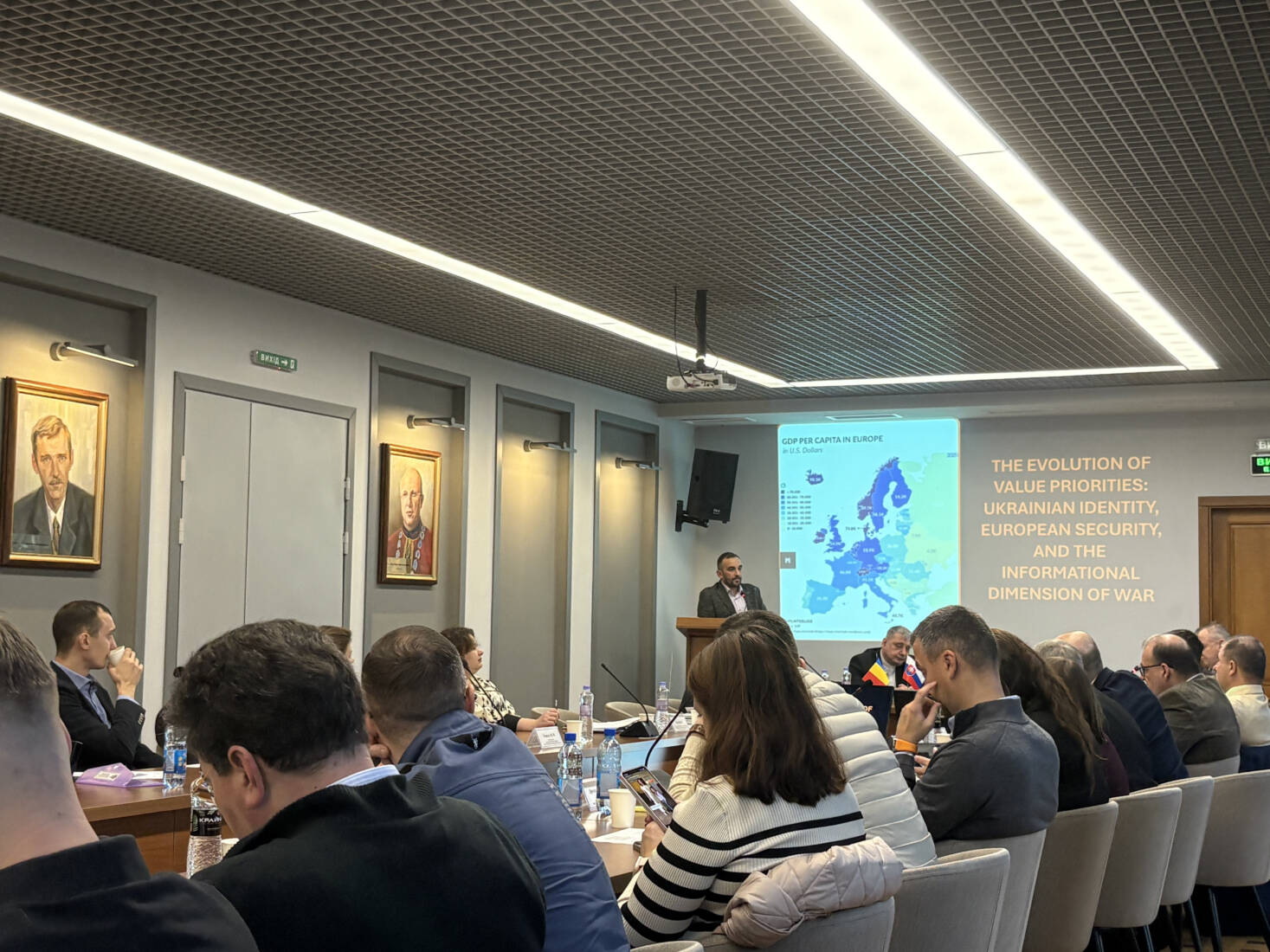 Професор Інст
Professor of the Institute of Technology and Business in Prešov, Marian Ambrosius, in his report, spoke about the theoretical aspects of war and peace in Hegel’s works, emphasizing the role of the state and moral principles in conflicts. He showed how these ideas can help to understand modern international events, in particular the Russian-Ukrainian war.
In addition to the above-mentioned participants, the conference was also attended by well-known scientists and practitioners from different cities of Ukraine, Slovakia, and Romania.
Each raised topics that are important for the development of our state: from political and economic aspects to humanitarian and social challenges. The exchange of experience and analysis of current problems gave the participants the opportunity to better understand how the international community reacts to aggression, as well as to outline ways to support Ukraine.